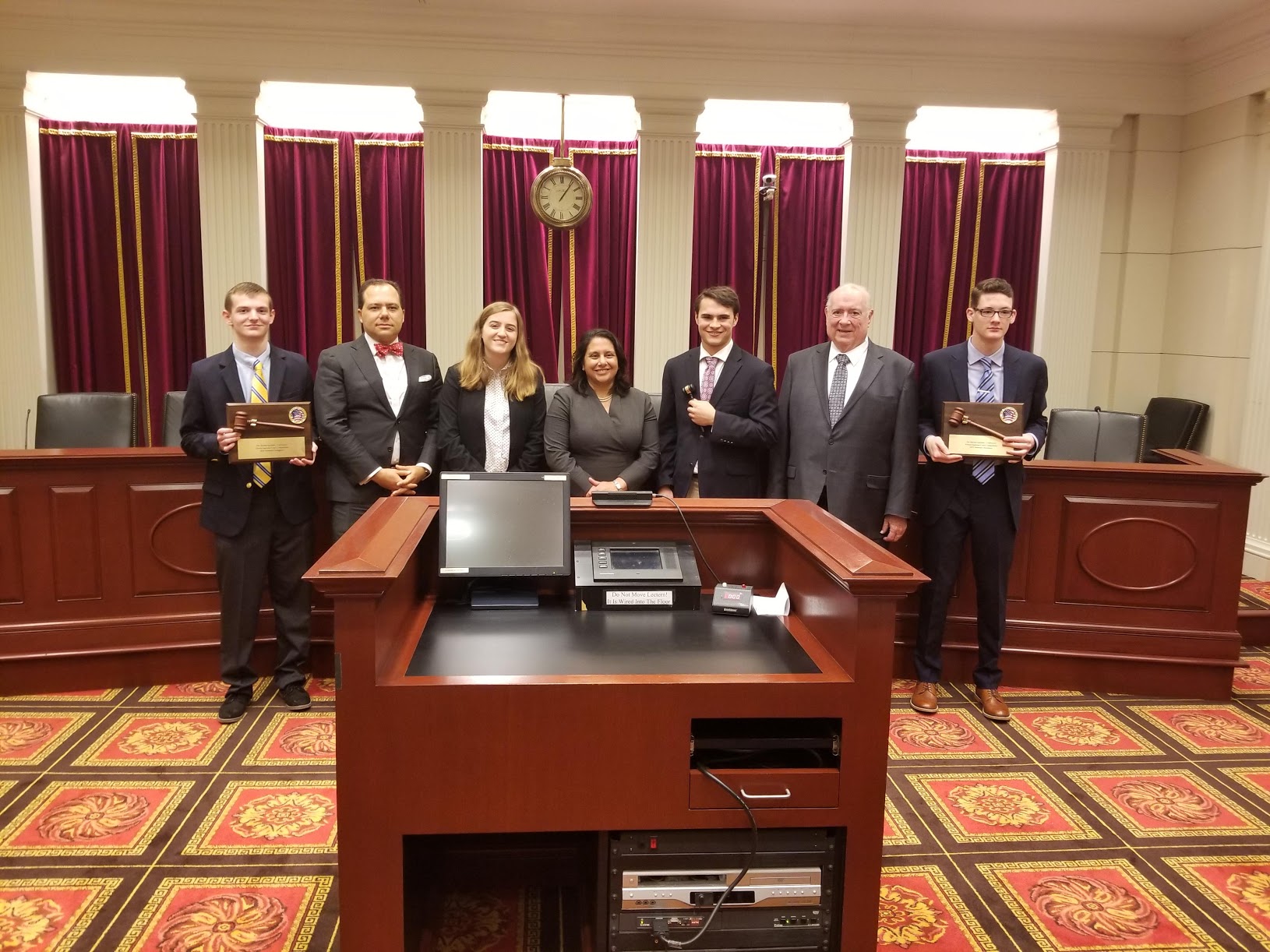
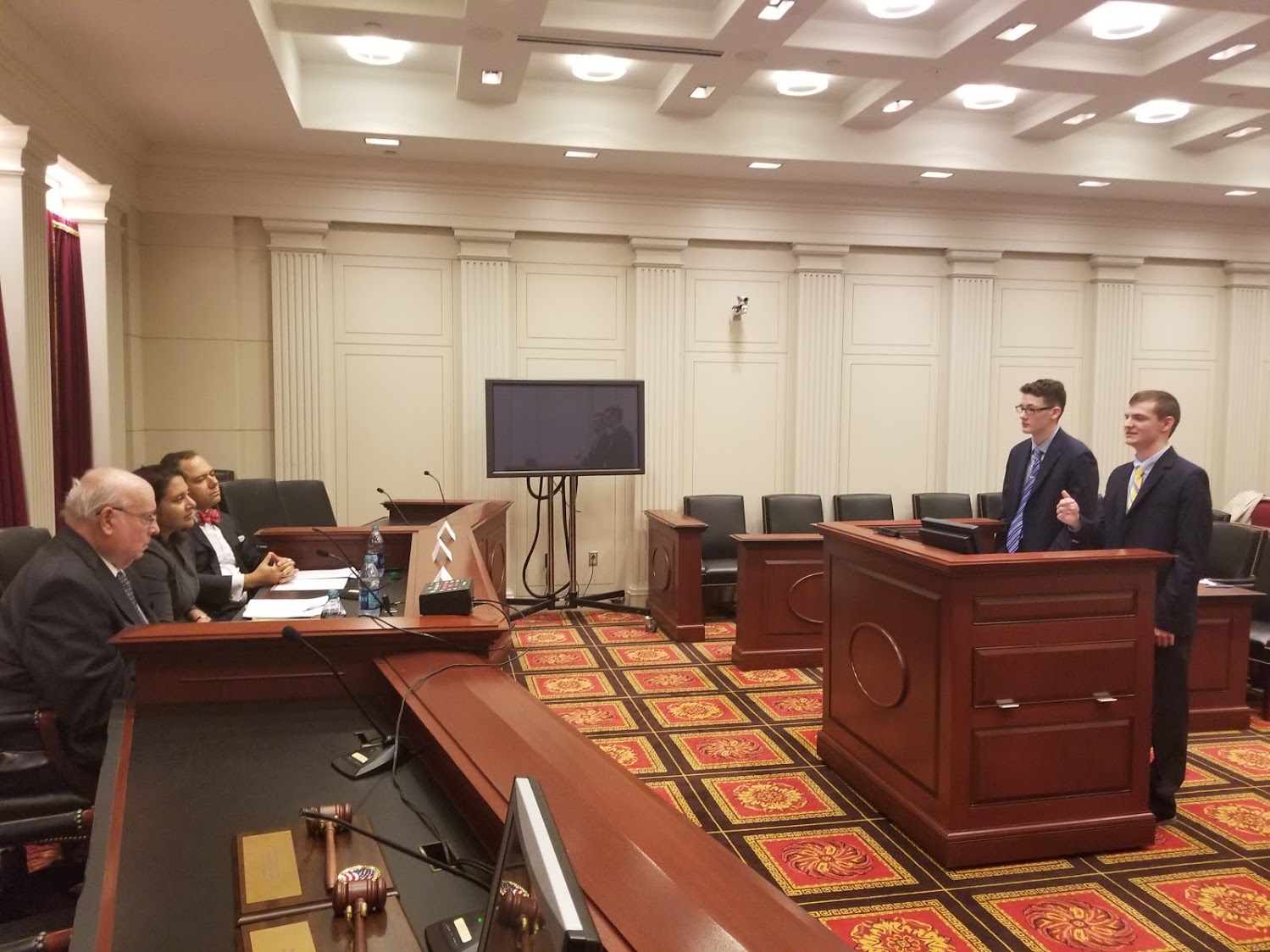
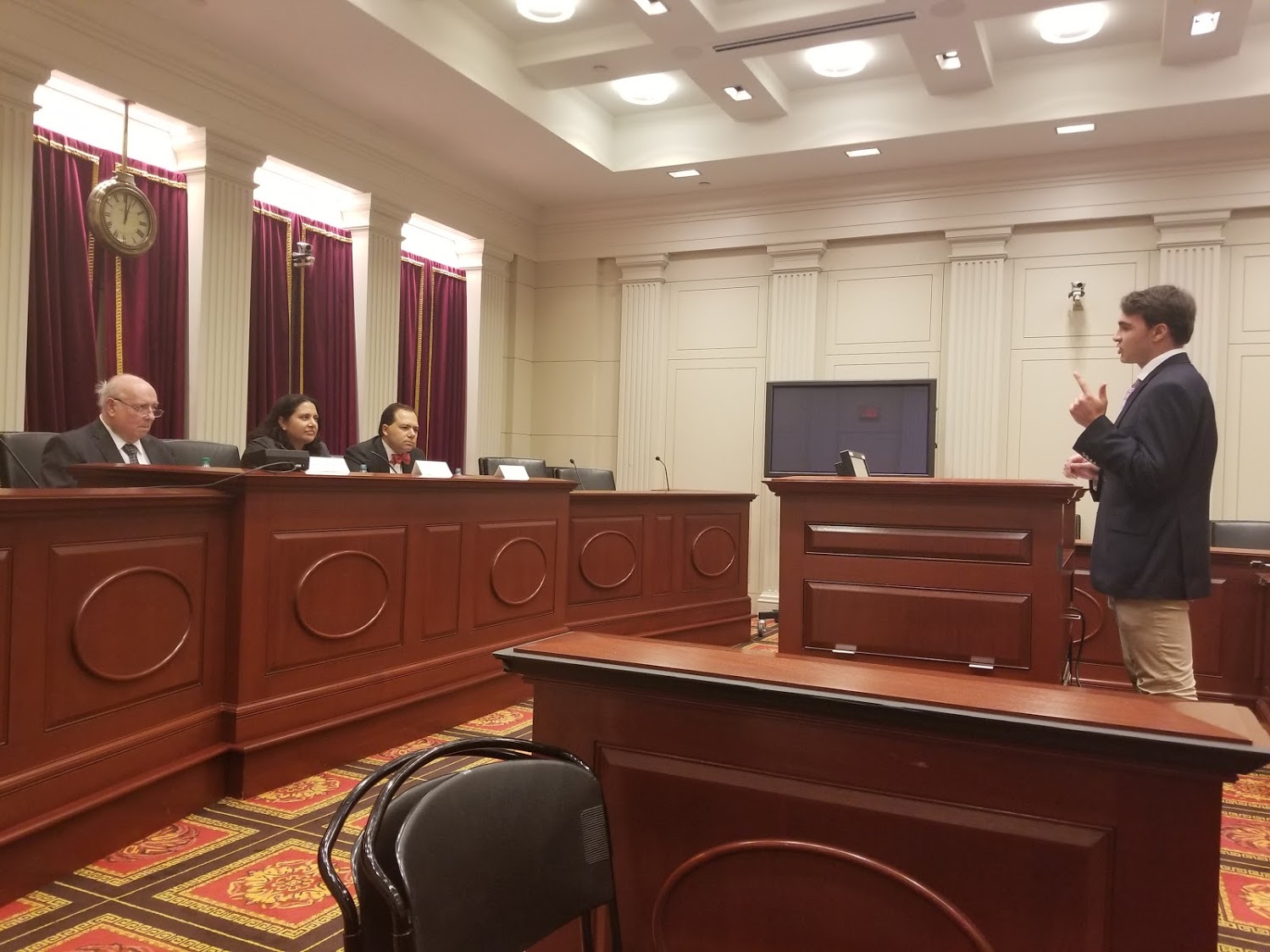
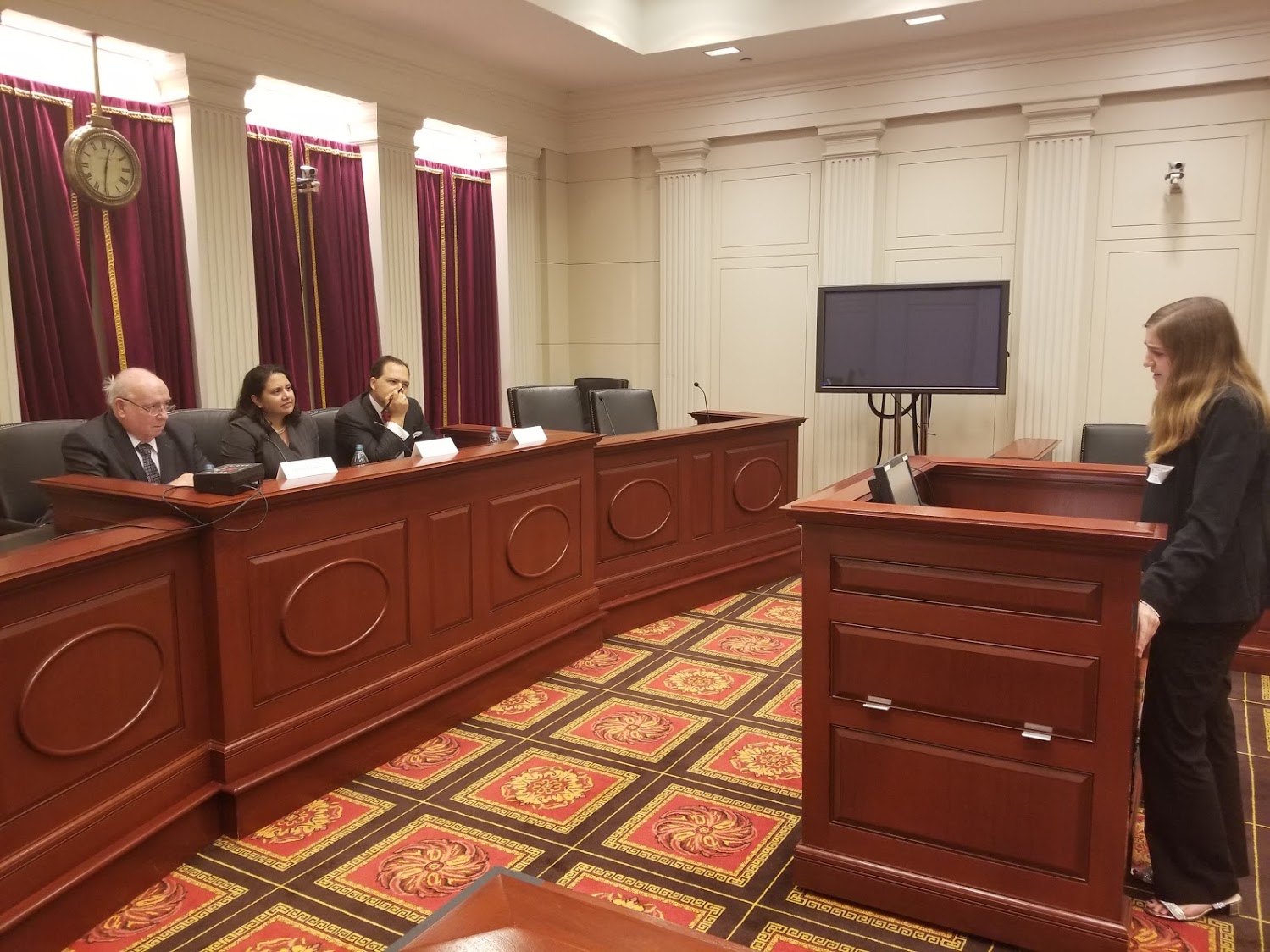
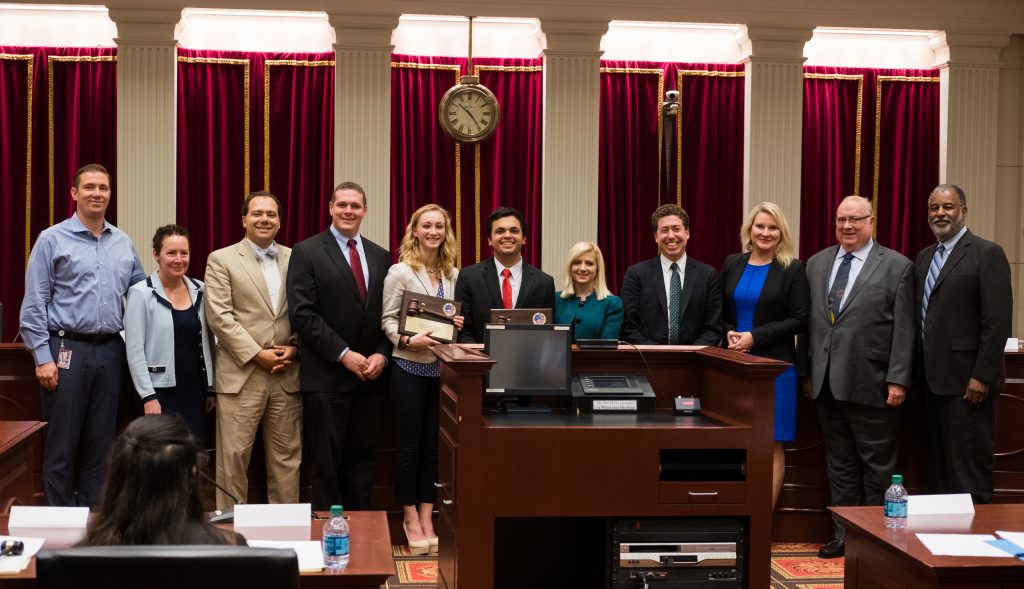
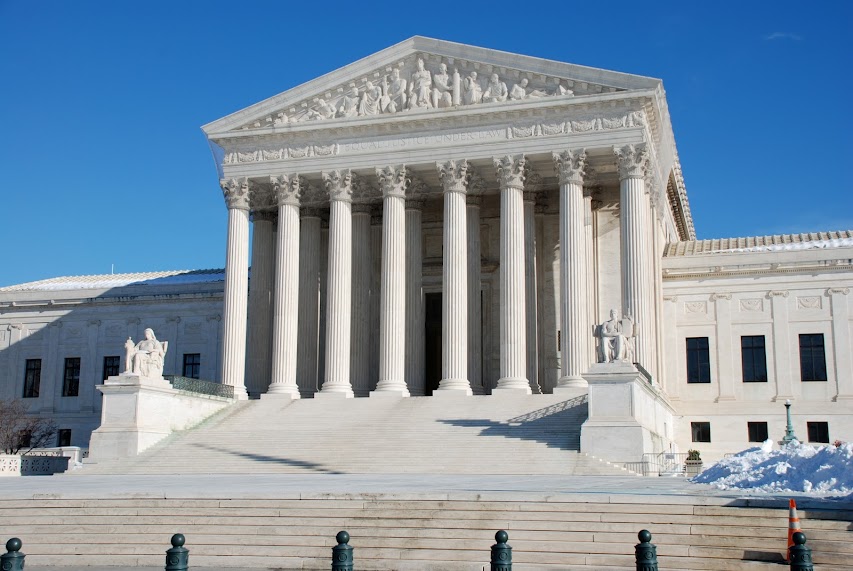
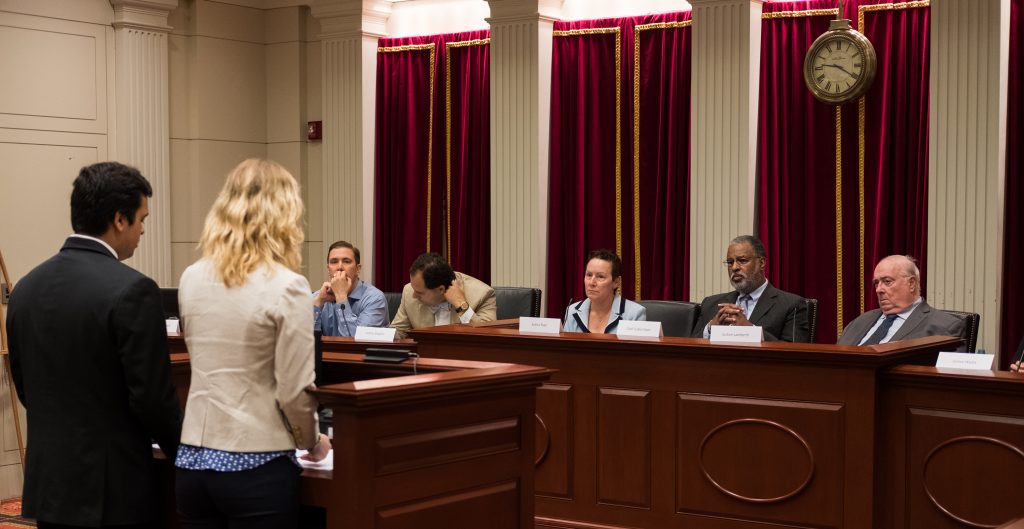
On April 26, 2018, ConSource and the Harlan Institute hosted the championship round of the sixth annual National Virtual Supreme Court Competition for high school students. The competition was hosted in the Supreme Court Institute Moot Court Room at Georgetown University Law Center, where two teams of talented high school students argued the case of Carpenter v. United States in front of a panel of three federal judges in a small-scale replica of the courtroom at the United States Supreme Court.

Zack Lori and Chris McDonnell, two juniors from Greenwich High School in Greenwich, Connecticut, argued on behalf of the petitioners, and Joanna Boyer, a junior, and Makaylia Askew, a freshman, from Creekview High School in Carrolton, Texas, argued on behalf of the respondents.
To reach the championship round, these outstanding students had to compete against dozens of teams from all corners of the continental United States. Lori and McDonnell and Boyer and Askew not only submitted the best-written appellate briefs, but also proved to be the most able oral advocates in the preliminary oral argument rounds.

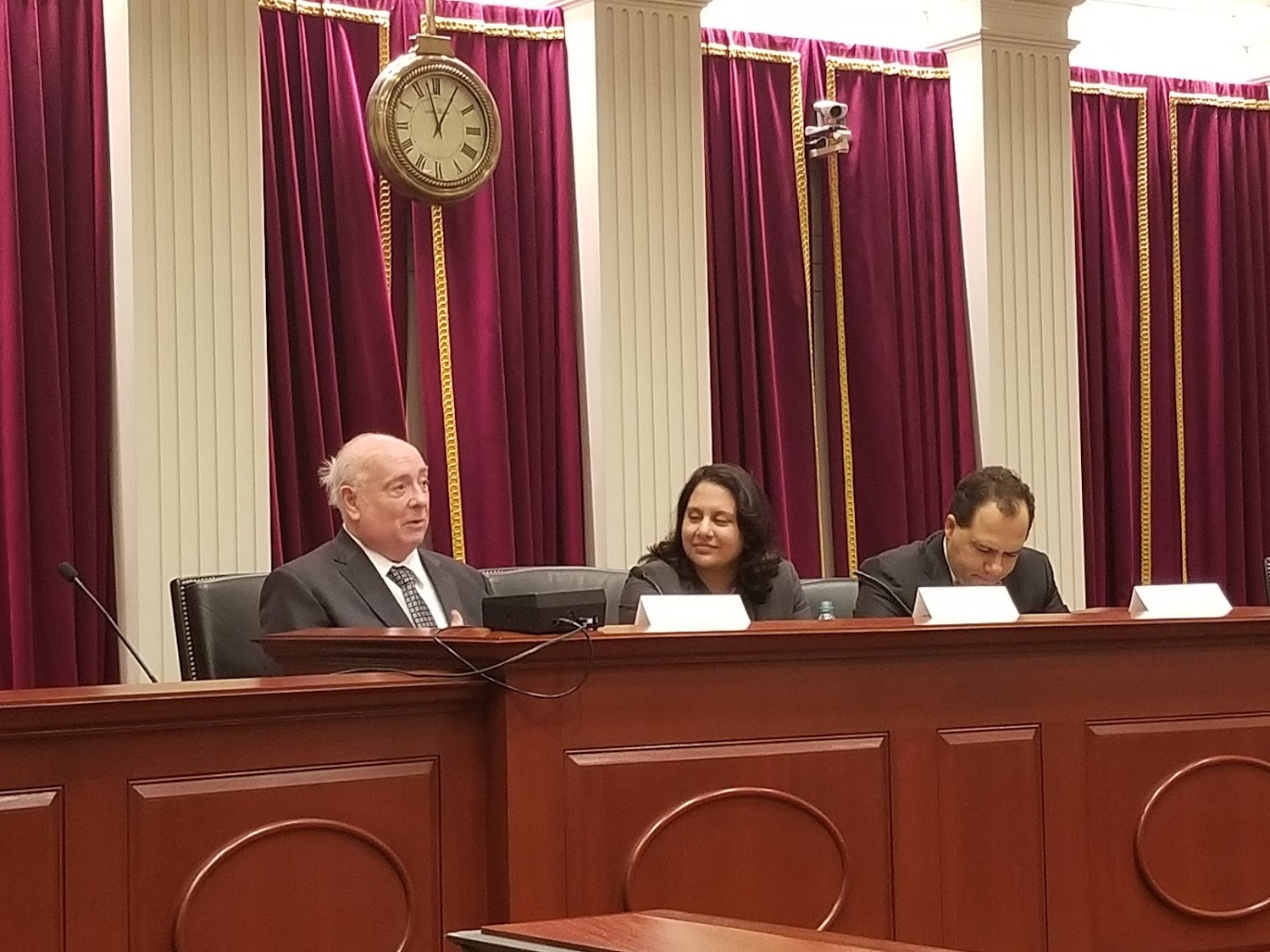
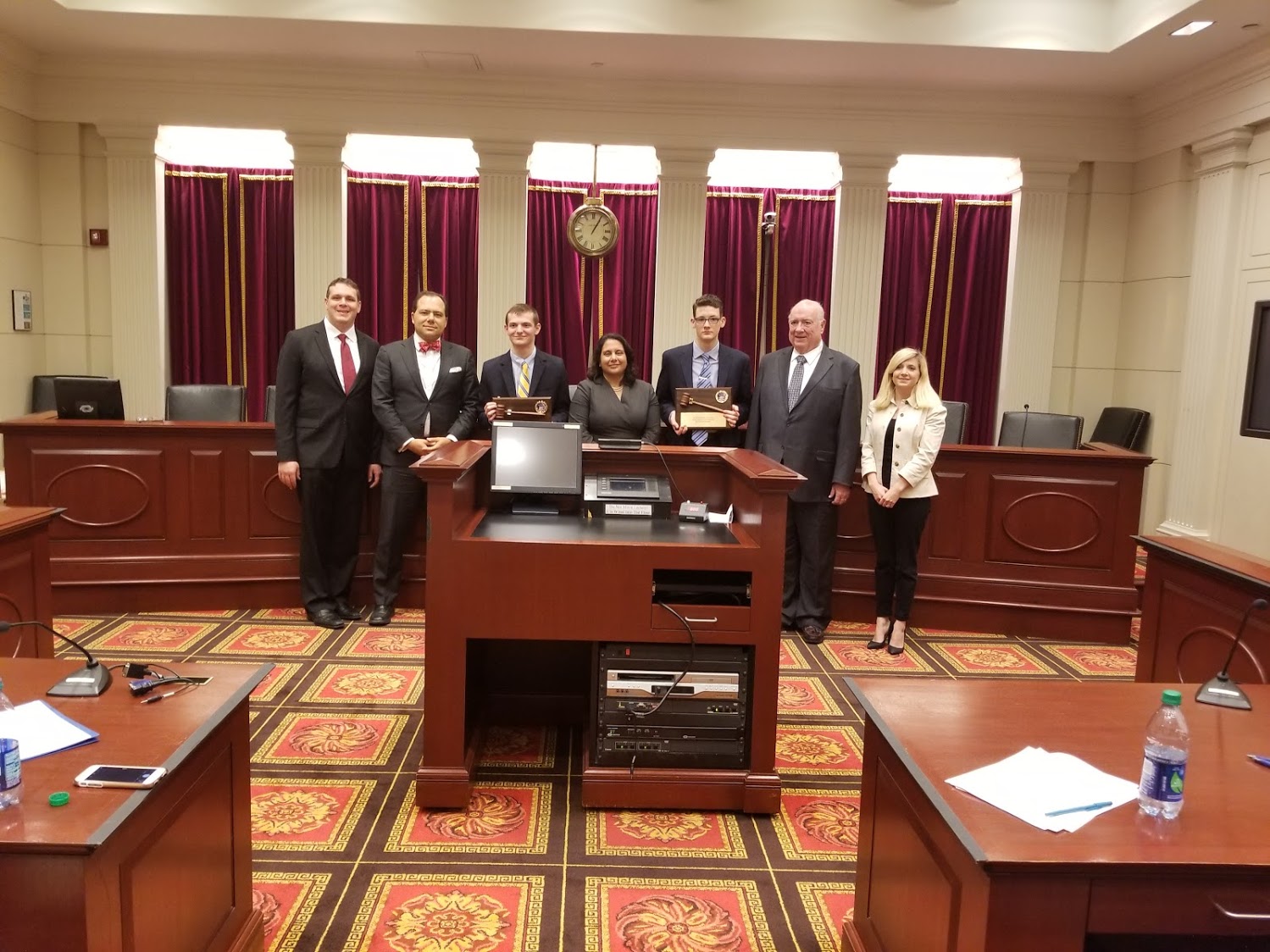
Their skills were put to the test during the championship round where, during oral argument in front of a lively panel of three distinguished judges, the students had to respond to rapid fire and complex legal questions. The competition was judged by Honorable Brett Kavanaugh, United States Court of Appeals for the District of Columbia Circuit, Honorable Meg Ryan, United States Court of Appeals for the Armed Forces, and Honorable Royce Lamberth, United States District Court for the District of Columbia.

The competition was fierce, but Joanna Boyer and Makaylia Askew from Creekview High School prevailed in the end and were named the champions of the Virtual Supreme Court Competition. All three judges found the students to be “knowledgeable, well prepared, and extremely poised.” “We were very impressed.”

Of their experience with the competition, the students shared –
“This competition is unlike any other I have participated in. I particularly liked the judges, who asked the most probing questions I have ever received and gave me the most insight into how appellate courts actually work.” – Joanna Boyer
“I am so thankful to be able to travel to Washington D.C. and have the opportunity to compete in this tournament. I can’t wait to compete again next year!” – Mikaylia Askew
Both Creekview students have previous moot court experience. Joanna Boyer, a junior, is active on color guard and the Moot Court Team. She has won the University of Texas at El Paso’s Moot Court tournament (where she was also awarded Best Attorney), won the State Championship at YMCA’s Youth and Government competition and qualified for the National Tournament two years in a row, and competed at Moot Court tournaments at both Duke and Princeton. She is also involved in her church youth group and Police Explorers outside of school. After high school, Joanna plans on attending the Coast Guard Academy. Makaylia Askew is a freshman at Creekview High School where, in addition to Moot Court, she is active in both Orchestra and Volleyball. This is only her second Moot Court tournament, having previously qualified for and advanced to states in the YMCA’s Youth and Government competition earlier this year. Outside of school, Makaylia is a self-taught artist.
Of our second place finalists, their coach Aaron Hull shared: "Chris and Zack showed phenomenal skill and effort this spring getting to the National Championship. They met with me multiple times and met in the mornings with our We The People coaches in the mornings and on a Sunday before the competition. Most impressively, they engaged their peers, three other pairs that made the live rounds (Alexander Bound and Matthew Weindling, James Heavey and Nick Liu, and Jovita Li and Catherine Yang), in preparations and arguments for Nationals to sharpen their understanding and focus on the Carpenter case. The teamwork, collaboration, and dedication of the entire squad propelled Zack and Chris forward to a marvelous nationals performance. I'm incredibly proud of them!"

Julie Silverbrook, Executive Director of ConSource, said of the student competitors: “These students represent the very best of America. They are a testament to what can be achieved when thought leaders, public officials, schools, teachers, and parents invest in the civics education of our young people!”
Reflecting on how the competition has grown over the last six years, Harlan Institute President, Josh Blackman, shared: “The top two teams were absolutely amazing. They fielded difficult and probing questions from a panel of nine judges with poise and sophistication. these students' impressive performance gives me faith for the future of the Republic. In less than five years, the Harlan Institute-ConSource Virtual Supreme Court grew from an idea Julie and I hatched to, what I hope, will remain as a venerable institution for many years to come. I am grateful for everyone involved, and can't wait to see how the tournament flourishes next year.”
If you are interested in registering your students for next year’s competition, please email info@harlaninstitute.org or info@consource.org to get on the mailing list for next year’s competition, which will be announced in the fall.



 Their coach, Aaron Hull, a model civic educator, shared how his students prepared for the competition: “Lucy prepared for the competition in the middle of AP Exams, and Arjun had graduated, moved on to Senior Internship, and could have mailed it in. Instead, both dug deep to develop Petitioners' argument at a substantive and nuanced level, attempting, as we often strive to find in our Republic, a balance between the safety of all of our citizens and excessive governmental entanglement in the religious beliefs of a sect of them. After we arrived in DC, settled in, had our dinner, and toured the monuments, they then continued to work into the night to deepen their understanding of the facts of the case. What a pair of citizen scholars.”
Arjun Ahuja said of the Virtual Supreme Court Competition: “There are few time periods in US history where it would be more important to be constitutionally literate than right now. I find the law and the legal field to be interesting so it's easy, but things like the Virtual Supreme Court keep the flame alive. I hope to continue with events like this to help advance the ideals that the Constitution represents.”
His teammate, Lucy Mini, added: “The Constitution is no where near as black and white as it may seem in a traditional classroom setting. Taking a stand on what those broad words mean, and then being battered by judges looking for any cracks in your argument, that is what the Founders intended when they wrote the Constitution, which is exactly what this competition provides for.”
Ilya Shapiro, one of this year’s judges, said of the competition: "Constitutional education is so important and it's heartening to see such a high level of constitutional facility from high schoolers. I would love to see this program become a standard part of social-science classes nationwide."
Julie Silverbrook, Executive Director of ConSource, said of the student competitors: “These students represent the very best of America. They are a testament to what can be achieved when thought leaders, public officials, schools, teachers, and parents invest in the civic education of our young people!”
Reflecting on how the competition has grown over the last five years, Harlan Institute President, Josh Blackman, shared: “The top two teams were absolutely amazing. They fielded difficult and probing questions from a panel of nine judges with poise and sophistication. Watching these students' impressive performance gives me faith for the future of the Republic. In less than five years, the Harlan Institute-ConSource Virtual Supreme Court grew from an idea Julie and I hatched to, what I hope, will remain as a venerable institution for many years to come. I am grateful for everyone involved, and can't wait to see how the tournament flourishes next year.”
Coach Aaron Hull expressed his appreciation for the Virtual Supreme Court Competition: “What [The Harlan Institute and ConSource] have achieved has motivated my students [by] placing a rigorous, demanding, achievable, and open-ended goal in front of [them] that will propel them to find their excellence, within themselves. Thank you for motivating and inspiring- its the core of education more broadly, and the key to inspiring the civic engagement our Constitutional Republic so desperately needs. My students will pay it forward, I can assure you.”
Gerrit Koepping, who coached second place finalists Jacklin Chang and Emma Austin, and has participated in the Virtual Supreme Court Competition for three years, added "This competition provides students with meaningful insight into how the courts work and how our constitution is interpreted. It is hard not to be inspired by the work and dedication of these students."
Their coach, Aaron Hull, a model civic educator, shared how his students prepared for the competition: “Lucy prepared for the competition in the middle of AP Exams, and Arjun had graduated, moved on to Senior Internship, and could have mailed it in. Instead, both dug deep to develop Petitioners' argument at a substantive and nuanced level, attempting, as we often strive to find in our Republic, a balance between the safety of all of our citizens and excessive governmental entanglement in the religious beliefs of a sect of them. After we arrived in DC, settled in, had our dinner, and toured the monuments, they then continued to work into the night to deepen their understanding of the facts of the case. What a pair of citizen scholars.”
Arjun Ahuja said of the Virtual Supreme Court Competition: “There are few time periods in US history where it would be more important to be constitutionally literate than right now. I find the law and the legal field to be interesting so it's easy, but things like the Virtual Supreme Court keep the flame alive. I hope to continue with events like this to help advance the ideals that the Constitution represents.”
His teammate, Lucy Mini, added: “The Constitution is no where near as black and white as it may seem in a traditional classroom setting. Taking a stand on what those broad words mean, and then being battered by judges looking for any cracks in your argument, that is what the Founders intended when they wrote the Constitution, which is exactly what this competition provides for.”
Ilya Shapiro, one of this year’s judges, said of the competition: "Constitutional education is so important and it's heartening to see such a high level of constitutional facility from high schoolers. I would love to see this program become a standard part of social-science classes nationwide."
Julie Silverbrook, Executive Director of ConSource, said of the student competitors: “These students represent the very best of America. They are a testament to what can be achieved when thought leaders, public officials, schools, teachers, and parents invest in the civic education of our young people!”
Reflecting on how the competition has grown over the last five years, Harlan Institute President, Josh Blackman, shared: “The top two teams were absolutely amazing. They fielded difficult and probing questions from a panel of nine judges with poise and sophistication. Watching these students' impressive performance gives me faith for the future of the Republic. In less than five years, the Harlan Institute-ConSource Virtual Supreme Court grew from an idea Julie and I hatched to, what I hope, will remain as a venerable institution for many years to come. I am grateful for everyone involved, and can't wait to see how the tournament flourishes next year.”
Coach Aaron Hull expressed his appreciation for the Virtual Supreme Court Competition: “What [The Harlan Institute and ConSource] have achieved has motivated my students [by] placing a rigorous, demanding, achievable, and open-ended goal in front of [them] that will propel them to find their excellence, within themselves. Thank you for motivating and inspiring- its the core of education more broadly, and the key to inspiring the civic engagement our Constitutional Republic so desperately needs. My students will pay it forward, I can assure you.”
Gerrit Koepping, who coached second place finalists Jacklin Chang and Emma Austin, and has participated in the Virtual Supreme Court Competition for three years, added "This competition provides students with meaningful insight into how the courts work and how our constitution is interpreted. It is hard not to be inspired by the work and dedication of these students."

 If you are interested in registering your students for next year’s competition, please email info@harlaninstitute.org or info@consource.org to get on the mailing list for next year’s competition, which will be announced in the fall.
 Lucy Mini and Arjun Ahuja from Greenwich High School in Greenwich, Connecticut, will argue on behalf of the petitioners.
 Jacklin Chang and Emma Austin from Lake Oswego High School in Lake Oswego, Oregon will argue on behalf of the respondents.
 Julie Silverbrook, Executive Director of ConSource, said of the students: “They represent the very best of America. They are informed, engaged and passionate. If you’re available on the morning of May 18 to see these young students in action, you will undoubtedly walk away with a renewed faith in the future of the American republic!”
One of the winners of the 2016 Virtual Supreme Court Competition, Tanya Reyna, an exceptional young woman from an impoverished, high crime area in Texas, shared that her experience with the competition last year “eased [her] apprehension” about the future. She said that meeting students, lawyers, professors and judges willing to take time out of their busy schedules “to inform younger generations of citizens about our legal system,” demonstrated to her that “as long as there are citizens like them, America will continue to hold a bright future.”
Josh Blackman, President of the Harlan Institute, explained that the “phenomenal students and teachers involved in this tournament restore my faith in the future of our Republic.” He added that now the teams will have to “face a bench of nine Judges, just like at the actual Supreme Court”
If you are interested in attending the championship round to cheer on this year’s finalists, please email
Julie Silverbrook, Executive Director of ConSource, said of the students: “They represent the very best of America. They are informed, engaged and passionate. If you’re available on the morning of May 18 to see these young students in action, you will undoubtedly walk away with a renewed faith in the future of the American republic!”
One of the winners of the 2016 Virtual Supreme Court Competition, Tanya Reyna, an exceptional young woman from an impoverished, high crime area in Texas, shared that her experience with the competition last year “eased [her] apprehension” about the future. She said that meeting students, lawyers, professors and judges willing to take time out of their busy schedules “to inform younger generations of citizens about our legal system,” demonstrated to her that “as long as there are citizens like them, America will continue to hold a bright future.”
Josh Blackman, President of the Harlan Institute, explained that the “phenomenal students and teachers involved in this tournament restore my faith in the future of our Republic.” He added that now the teams will have to “face a bench of nine Judges, just like at the actual Supreme Court”
If you are interested in attending the championship round to cheer on this year’s finalists, please email