Nathan v. Alamo Heights Independent School District
United States Court of Appeals for the Fifth Circuit - Opinion (April 21, 2026)
Supreme Court Docket No. 26-257 (docketed on August 17, 2026)
Certiorari Pending
Case Information
- Petitioners: Mara Nathan, Individually and on Behalf of Her Minor Child, M. N., et al.
- Respondents: Alamo Heights Independent School District
Supreme Court Precedents
- Zorach v. Clauson, 343 U.S. 306 (1952)
- Engel v. Vitale, 370 U.S. 421 (1962)
- Sch. Dist. of Abington Twp. v. Schempp, 374 U.S. 203 (1963)
- Epperson v. Arkansas, 393 U.S. 97 (1968)
- Stone v. Graham, 449 U.S. 39 (1980)
- Larson v. Valente, 456 U.S. 228 (1982)
- Marsh v. Chambers, 463 U.S. 783 (1983)
- Edwards v. Aguillard, 482 U.S. 578 (1987)
- Lee v. Weisman, 505 U.S. 577 (1992)
- Agostini v. Felton, 521 U.S. 203 (1997)
- Santa Fe Indep. Sch. Dist. v. Doe, 530 U.S. 290 (2000)
- Van Orden v. Perry, 545 U.S. 677 (2005)
- Kennedy v. Bremerton Sch. Dist., 597 U.S. 507 (2022)
Tournament Instructions
Teams of two high-school students will write an appellate brief, and present oral arguments, addressing the following question:
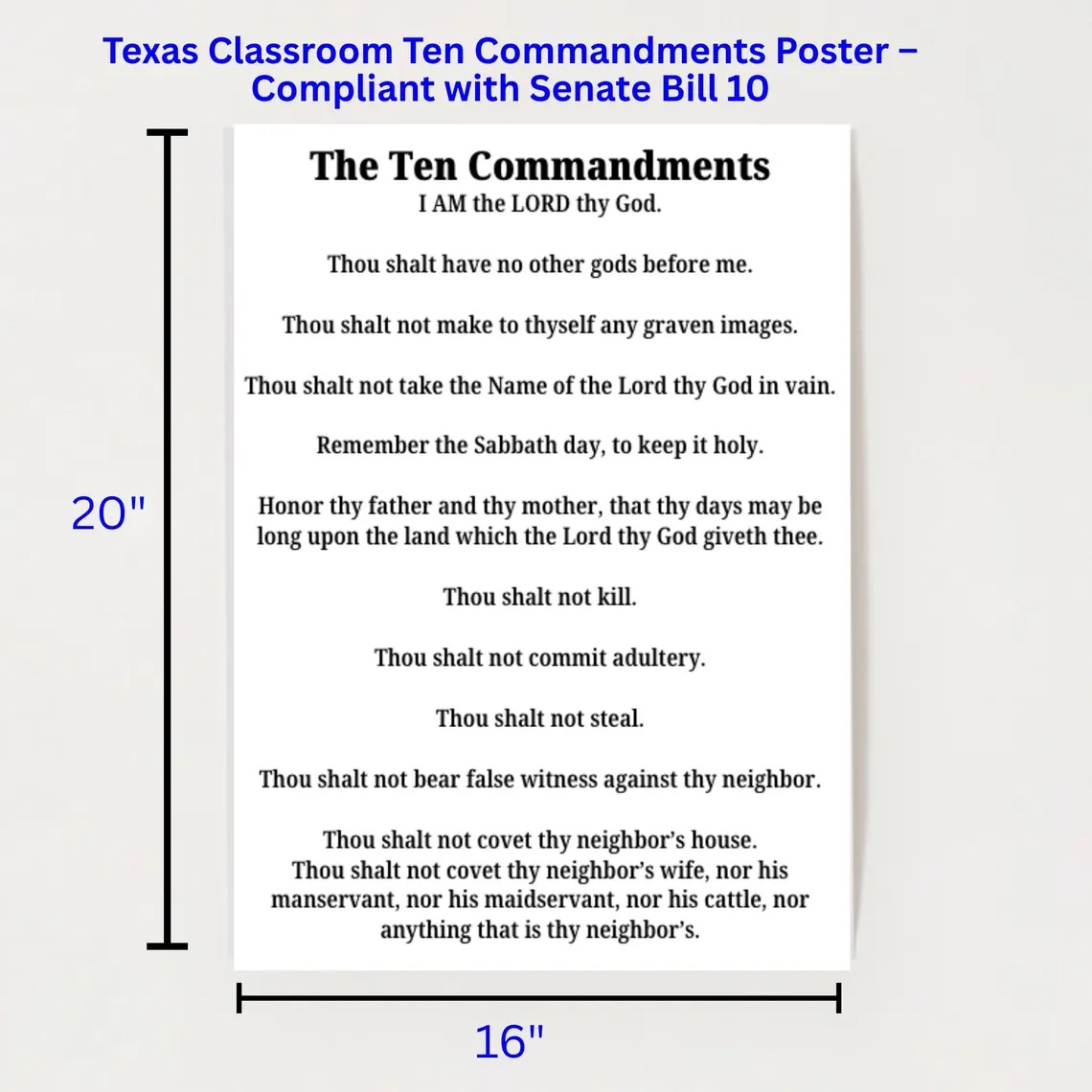
- Whether the original meaning of the establishment clause forbids a state from mandating the permanent, conspicuous display of a government-selected version of the Ten Commandments in every public school classroom.
Please register at the Institute for Competition Sciences.
Preliminary Round
Deadline: November 6, 2026 (11:59 PM ET) All teams are invited to participate in the Preliminary Round. There will be a written component and an oral component. Submissions will be graded based on this rubric. Please carefully review the majority and dissenting opinions from the En Banc Fifth Circuit.
Written Component
Teams will be asked to answer the following ten questions in a neutral, objective fashion. At this point of the competition, teams are not yet advocating for or against a position. Each answer should be at least 200 words but no more than 1,000 words. Each answer must cite at least two of the Supreme Court precedents listed above and the primary sources cited in those cases. The preliminary round of the competition is “closed,” and students cannot cite any other sources. Carefully proofread the assignment for spelling, grammar, and usage. The use of generative AI is prohibited. Teams that are found to have used AI will be immediately disqualified.
- In the First Amendment, what is the original meaning of "establishment of religion"? And how does the word "respecting" modify the concept of an "establishment of religion"?
- When Engel v. Vitale was decided, there was a longstanding tradition in many states to read prayers before classes began. How did Engel treat the relevance of that tradition?
- What is the status of Stone v. Graham after Kennedy v. Bremerton School District? How did the en banc Fifth Circuit treat Stone v. Graham?
- What is the significance of the fact that the Texas legislature selected the version of the Ten Commandments from the King James Bible?
- What is the significance of the fact that Texas required posting the Ten Commandments in a "conspicuous place" in all classrooms for every grade?
- What is the significance of the fact that there are no lessons or instructions that must be provided about the Ten Commandments? Rather, the display is only meant to be read, and not heard.
- Under Kennedy v. Bremerton School District, what makes a display of religion in a public school unconstitutionally coercive? What is the status of Lee v. Weisman after Kennedy v. Bremerton School District?
- What were some public displays of religion made by governments before the First Amendment was ratified? How do those displays compare to the Texas law?
- If the Ten Commandments display is upheld, could the state require the posting of more explicitly religious texts said as the Lord's Prayer? Could students be asked to listen to the reading of the Lord's Prayer, so long as they are not required to recite it?
- Based on the Supreme Court's binding precedents, how should it resolve the constitutionality of the Texas law? Based on the original meaning of the Establishment Clause, how should the Supreme Court resolve the constitutionality of the Texas law?
Oral Component
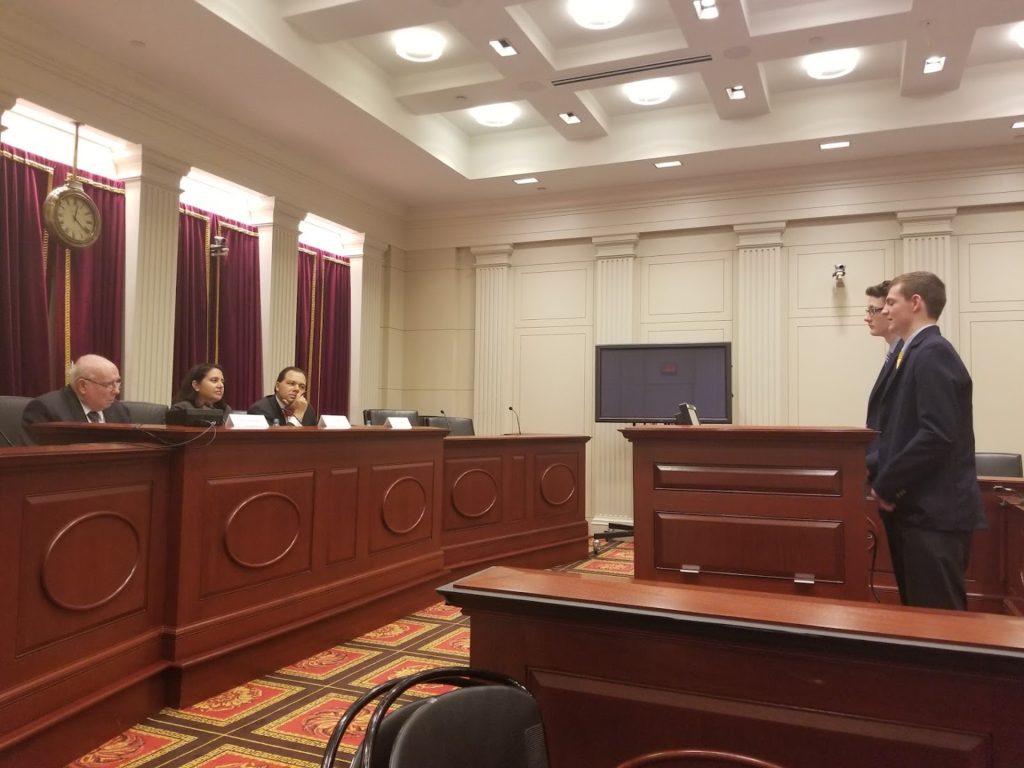
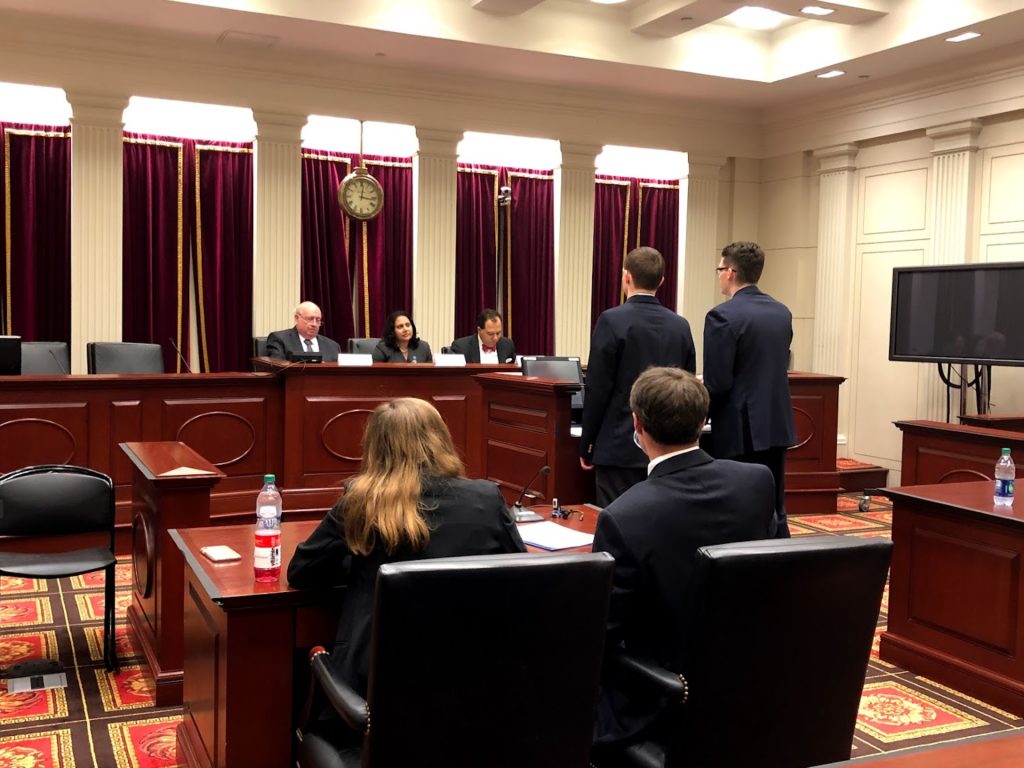
Teams will be asked to present their ten questions in the form of an oral argument. Each student will answer five questions. Students are to avoid reading off prepared remarks (whether on paper or on a device), and must maintain eye contact. These recordings will be uploaded to YouTube. The recording must last at least fifteen minutes.
The Semifinal Round
Deadline: December 11, 2026 (11:59 PM ET) Teams that advance to the Semifinal Round will be asked to prepare a “Petitioner” brief on behalf of the the Petitioners, arguing that the Texas law violates the Establishment Clause. More details will be provided after the conclusion of the preliminary round. Oral argument will be scheduled over Zoom during the weeks of January 4 and January 11.
Please review the winning submissions from previous years:
- OT2025: Patriots v. Loyalists
- OT 2024 - Free Speech Coalition v. Paxton
- OT 2023 - Moody v. NetChoice
- OT 2022 - Students for Fair Admissions v. Harvard
- OT 2021 - New York State Rifle & Pistol Association v. Bruen
- OT 2020 – Torres v. Madrid
- OT 2019 – Espinoza v. Montana Department of Revenue
- OT 2018 – Timbs v. Indiana
- OT 2017 – Carpenter v. United States
- OT 2016 – Trinity Lutheran Church v. Comer
- OT 2015 – Abigail Fisher v. University of Texas, Austin (II)
- OT 2014 – Zivotofsky v. Kerry
- OT 2013 – National Labor Relations Board v. Noel Canning
- OT 2012 – Abigail Fisher v. University of Texas, Austin (I)
The Round of 8
Deadline: February 12, 2026 (11:59 PM ET) The top eight teams that advance will be asked to prepare a “Respondent” brief in support of the Respondent, arguing that the Texas law does not violate the Establishment Clause. More details will be provided after the conclusion of the preliminary round. Oral argument will be scheduled over Zoom during the week of February 15 and February 22.
The Championship Round
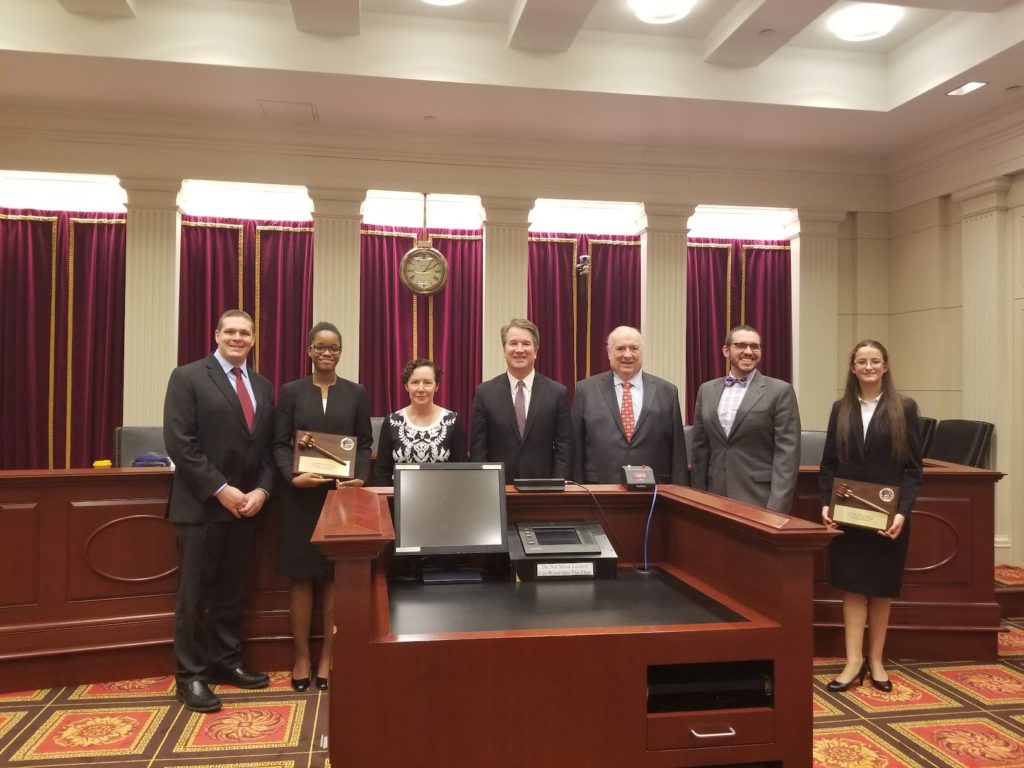
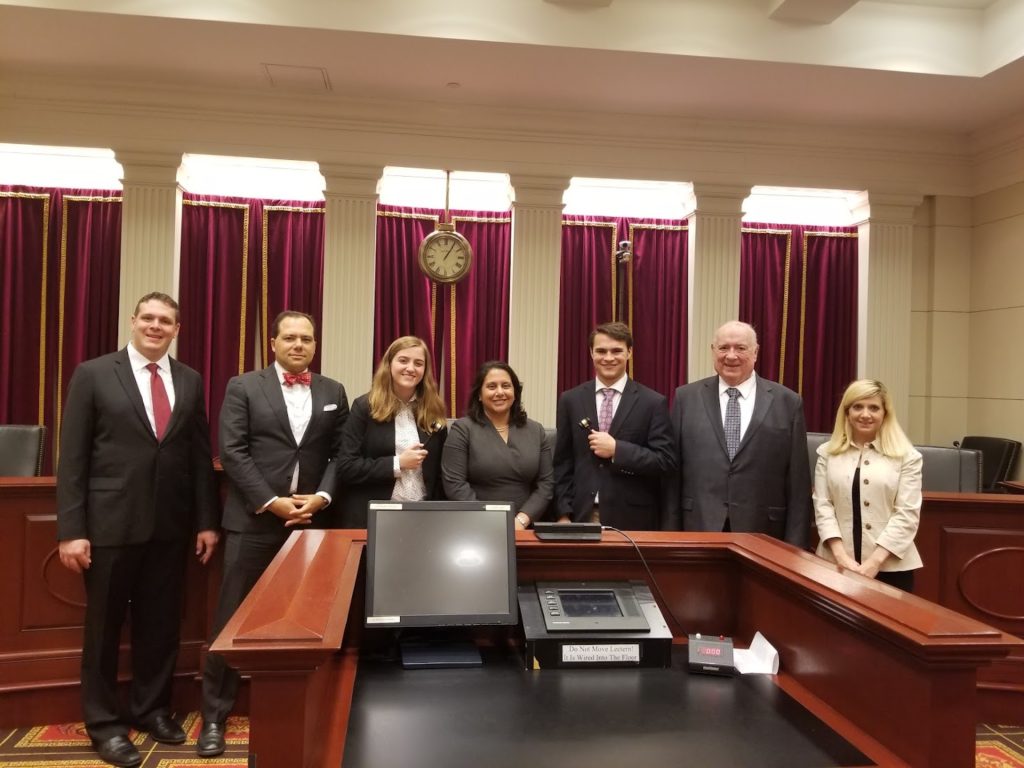
The top two teams will advance to the Championship round which will be held in Washington, D.C. on March 11 or 12, 2026. The Harlan Institute will cover airfare and hotel for the students and up to two chaperones per team.